
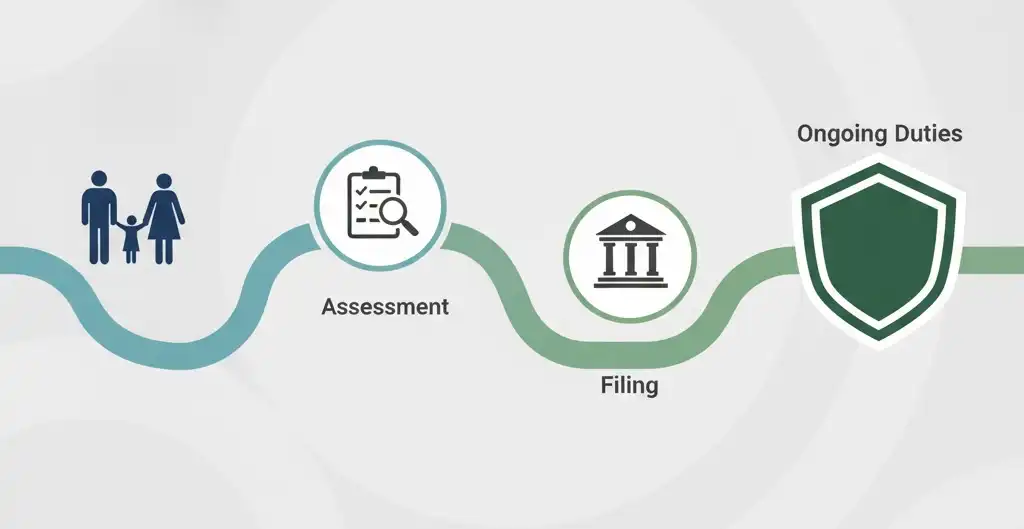
Are you considering stepping up to become a family guardian for a loved one who can no longer make decisions on their own? Whether it's due to aging, disability, or illness, becoming a family guardian (also known as a conservator in some states) is a significant responsibility that involves legal, financial, and emotional commitments. This beginner's guide walks you through the step-by-step process of how to become a family guardian, targeting those searching for clear, actionable insights.
Important Disclaimer: This article is for informational purposes only and does not constitute legal advice. Guardianship laws vary by state, and the process can be complex. Always consult a qualified attorney, court official, or professional advisor before proceeding. For state-specific resources, check our State-by-State United States Probate Court Directory.
What Is a Family Guardian?
A family guardian is typically a relative appointed by a court to make decisions on behalf of an incapacitated person (known as the "ward"). This role might involve managing finances, healthcare, living arrangements, or daily needs. It's not the same as power of attorney, which is often set up in advance. Guardianship usually comes into play when someone lacks capacity and no prior arrangements exist.
Common reasons to pursue guardianship include:
- Protecting elderly parents with dementia.
- Supporting adult children with disabilities.
- Assisting family members with mental health challenges.
Becoming a guardian requires court approval and ongoing reporting, so it's essential to understand the commitment upfront.
Step-by-Step Process to Become a Family Guardian
Here's a high-level overview of the typical steps. Remember, this can differ based on your location. Start by researching your state's laws via official court websites.
Step 1: Assess the Need and Alternatives
- Evaluate if guardianship is truly necessary. Could less restrictive options like a healthcare proxy or supported decision-making work instead?
- Discuss with family members and the potential ward (if possible) to ensure everyone is on board.
- Consult professionals: Talk to a doctor for a capacity assessment and an elder law attorney for guidance.
- Tip: Use our Free Downloads for a "Family Guardian Checklist" to help organize your thoughts.
Step 2: Research State-Specific Requirements
- Guardianship laws are handled at the state level. For example, in California, you might file through probate court, while New York has specific forms for Article 81 guardianships.
- Key requirements often include:
- Being at least 18 years old and of sound mind.
- No criminal history that could disqualify you (e.g., financial crimes).
- Proof that the ward is incapacitated (via medical reports).
- Resources: Visit our State-by-State Associations Directory for local guardianship organizations that offer free workshops or helplines.
Step 3: File a Petition with the Court
- Gather necessary documents: Medical evaluations, financial statements, and a detailed petition explaining why guardianship is needed.
- Submit the petition to your local probate or family court. Fees vary (often $100 to $500), and you may need to notify relatives.
- A court investigator or guardian ad litem might be appointed to evaluate the situation.
- Pro Tip: Many states provide free forms online. Link to them via our Legal Info Hub.
Step 4: Attend the Court Hearing
- Once filed, a hearing is scheduled (usually within 30 to 60 days).
- Present your case: Explain your relationship to the ward, your qualifications, and the need for guardianship.
- The ward has the right to attend and object, and the judge will decide based on evidence.
- If approved, you'll receive a court order outlining your powers (e.g., limited to finances or full authority).
Step 5: Fulfill Ongoing Responsibilities
- After appointment, you may need to post a probate bond (a type of insurance to protect the ward's assets). Learn more in our Probate Bonds Guide.
- File annual reports with the court on the ward's finances, health, and well-being.
- Manage duties ethically: Avoid conflicts of interest and prioritize the ward's best interests.
- Note: Tools like Advocord guardianship software can help streamline tracking and reporting. Check it out at GuardianshipSoftware.com.
Common Challenges and Tips for New Guardians
Becoming a guardian isn't just a legal process. It's a life change. Here are some hurdles and how to overcome them:
- Emotional Strain: Caregiving can be stressful. Join support groups through our Non-Profit Directory for emotional resources.
- Financial Management: Track expenses meticulously. Explore apps in our Financial Tools Directory like budgeting software that complements guardianship needs.
- Legal Updates: Laws change. Stay informed via our Blog for articles like "State-Specific Guardianship Law Updates."
- Self-Care: Don't forget your own well-being. Recommended reads from our Recommended Books Page include "How to Care for Aging Parents" for practical advice.
Pro Tip: If you're overwhelmed, consider co-guardianship with another family member to share the load.
Additional Resources to Get Started
- Free Templates: Download our care calendars and budget spreadsheets from Free Downloads.
- Health Tools: Check apps for monitoring in our Health & Caregiving Tools Directory.
- Community Support: Share your experiences in our Forums or sign up for our Newsletter for monthly tips.
Final Thoughts
Becoming a family guardian is a profound way to support a loved one, but it's crucial to approach it with preparation and professional help. By following this step-by-step guide, you'll be better equipped to navigate the process. Remember, you're not alone. FamilyGuardianTools.org is here with resources to empower you every step of the way.
Ready to organize your guardianship duties? Explore Advocord software for seamless management, or get a quote on probate bonds today. Have questions? Drop them in the comments!
If you found this guide helpful, share it with others and subscribe for more caregiver tips.
Join Our Community!
Ready to navigate the guardianship journey with confidence? Subscribe to our newsletter for helpful tips, resources, and community support. Let's stay connected!